


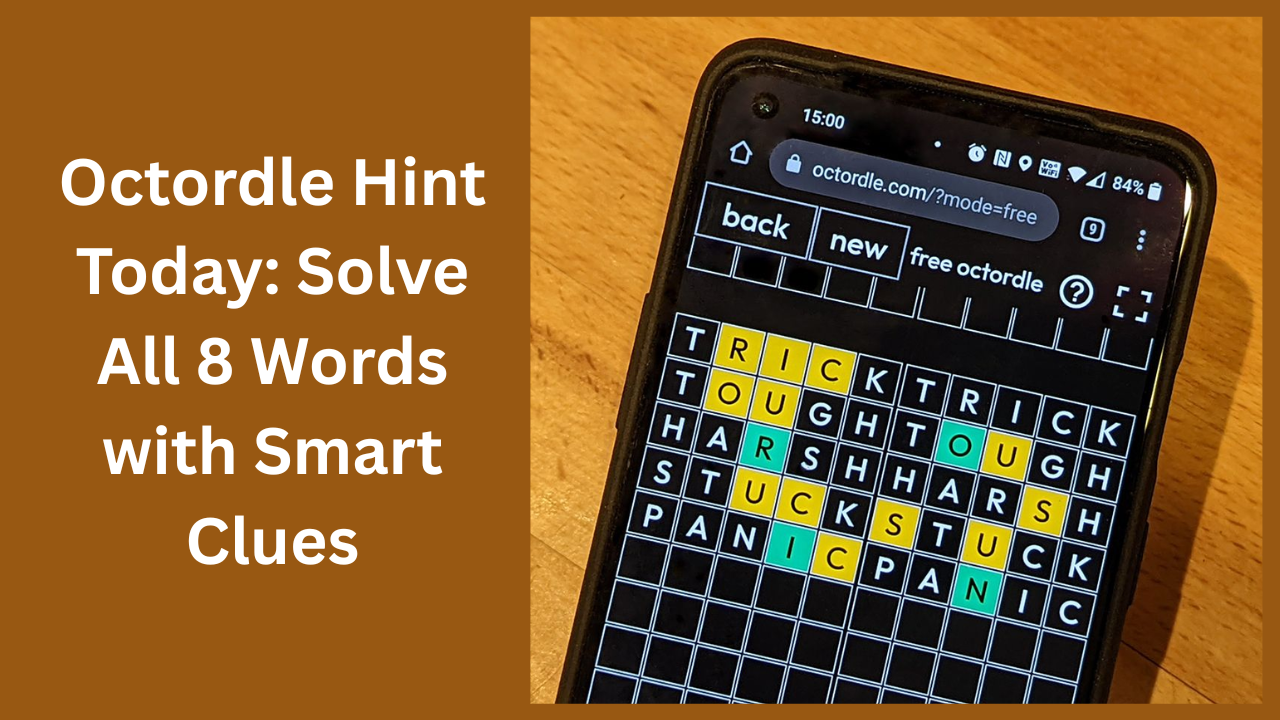
If you love testing your mind with word puzzles and crave something beyond the usual single-word guessing games, Octordle might just become your next obsession. This game takes the familiar thrill of word challenges and amplifies it — instead of finding one hidden word, you’re tasked with solving eight five-letter words at once. It’s a balancing act of logic, vocabulary, and intuition that keeps your brain firing on all cylinders. With only 13 guesses to uncover all eight words, every move counts.
Each guess affects every grid, forcing you to juggle patterns, letters, and colors across multiple boards simultaneously. What might help one grid could mislead another, so strategy is everything. In this article, we’ll explore how to read and apply an Octordle hint today, share tried-and-tested methods to think smarter, avoid common traps, and explain how a few well-timed clues can transform frustration into that satisfying moment of success.
How Octordle Works
Before diving into hints and strategies, it helps to grasp how the game actually works fully. In Octordle, especially in its Classic mode, you’re challenged to solve eight five-letter words all at once. Each guess you make applies to every puzzle simultaneously, which means one word can reveal insights for multiple grids at the same time. The feedback system is simple but crucial: letters that land in the correct position turn green, those that are in the word but misplaced turn yellow, and letters that don’t appear in that particular word at all show up as gray. This color-coded feedback becomes your map, guiding each decision you make. What makes Octordle truly engaging is how it forces you to think broadly—every guess carries weight across all eight puzzles, demanding both patience and pattern recognition to make the most of every move.
Every guess in Octordle counts, which is why each word you choose needs to do more than solve one grid—it should reveal as much information as possible across all eight. With only 13 chances to uncover every hidden word, there’s little room for trial and error. Each move has to balance risk and reward, giving you the best odds of finding useful letters without wasting a turn. And because the puzzle refreshes daily with an entirely new set of words, your skills are tested again and again. That’s where the Octordle hint today becomes invaluable—it sharpens your focus, helps you spot early patterns, and keeps your winning streak alive from one day to the next.
Octordle Hint Today Explained
So, what do we actually mean when we talk about an “Octordle hint today”? Think of it as a gentle nudge rather than a spoiler—an insight designed to point you in the right direction without handing you the answer. These hints are often based on recurring patterns or subtle letter trends that show up in recent puzzles. Maybe they suggest that a particular letter appears in more than one grid, or that two of the words happen to start with the same letter. While they never reveal the complete solution, they act like a compass, guiding you toward the right possibilities and saving you from wasting guesses. Used wisely, these small clues can make the difference between running out of attempts and pulling off a clean, satisfying win across all eight words.
When you come across the phrase “Octordle hint today,” think of it as your cue to start collecting every clue you can find. That might mean checking daily hint summaries, paying close attention to repeated letters that appear in yellow across different grids, or spotting familiar word patterns from previous puzzles. The goal isn’t just to notice these clues—it’s to use them with intent. Each hint acts like a filter, helping you eliminate what doesn’t fit and focus on what does. By layering these observations together, you can make more intelligent, more calculated guesses that push all eight boards forward instead of relying on luck or random trial and error.
Strategies to Solve Octordle Faster
Now that you understand how Octordle works and how daily hints come into play, let’s dive into some practical, real-world strategies you can use to improve your winning streak and overall success rate steadily.
1. Start with Strong Seed Words
Your opening guess sets the tone for the entire game. Pick a starting word that includes a balance of common vowels like A, E, and I, along with frequent consonants such as R, S, T, L, and N. This combination gives you the broadest possible coverage across all eight boards right from the beginning. Since every guess impacts every puzzle at once, that first move acts like a diagnostic scan—it reveals patterns, narrows possibilities, and helps you interpret how letters behave across the grids. The information you gain here becomes the foundation for your next moves, letting you apply today’s Octordle hints with precision instead of guesswork.
2. Use the Daily Hint as a Filter
Use the “Octordle hint today” as your compass. When you know, for example, that one of the words begins with a particular letter or that another contains an unusual consonant, let that information shape your next move. Every hint is an opportunity to make your guesses count. By aligning your words with these clues, you avoid wasting precious turns on letters you’ve already ruled out. Once you’ve confirmed where a specific letter belongs—or doesn’t—you can shift your focus to other boards with confidence, making each guess more targeted and productive across all eight puzzles.
3. Manage Overlaps Across Grids
Because every guess impacts all eight boards at once, you need to make each move count. Think of every word you enter as a strategic test rather than a random shot in the dark. For instance, if one grid shows a green “A” in the third position while another shows a yellow “A” in the first, that single guess has already revealed valuable clues about both words. Pay close attention to these overlaps—when multiple boards share a letter, you can use your next guesses to experiment with different positions across the puzzles. This layered approach helps you gather maximum information in fewer moves, turning each round into a smart, data-driven step toward solving all eight words.
4. Prioritize Boards You Understand First
After a few rounds of guessing, you’ll usually notice that some boards start to fall into place while others remain stubbornly vague. This is your cue to focus on the easier ones first—the grids where you already have a good mix of green and yellow tiles. Locking in those simpler words early gives you quick wins and helps free up your concentration for the trickier puzzles. Once you’ve cleared the obvious answers, you can approach the more rigid boards with a clearer head and more targeted guesses, making the whole process smoother and more strategic.
5. Track Letters Across Boards with Care
Keep a running list—mental or on paper—of what you’ve learned so far. Note which letters are confirmed, which ones have been ruled out, and where they might still fit. Track these details carefully across all eight boards, so you don’t waste guesses repeating what you already know. For instance, if you’ve already discovered that the letter “B” doesn’t appear in any of the words, skip guesses that rely on it heavily. This kind of organized tracking keeps your strategy sharp, conserves guesses, and helps you uncover new information with every move.
Common Mistakes to Avoid
No matter how sharp your instincts are or how strong your first guess might be, there are a few common traps that even experienced Octordle players fall into. Being aware of these mistakes—and learning how to sidestep them—can make all the difference in keeping your accuracy and success rate consistently high.
Mistake 1: Overusing Rare or Uncommon Words
In the rush to uncover new letters, many players make the mistake of throwing in obscure or rarely used words right from the start. While it might seem like a smart way to test more possibilities, it often backfires. Early guesses work best when they’re built from common, everyday vocabulary because those words give you feedback that’s actually useful across multiple boards. Using rare or overly specific words too soon tends to waste guesses and can leave you stuck with less information to build on later.
Mistake 2: Ignoring Letter Overlaps or Shared Feedback
Since every guess affects all eight boards at once, it’s crucial to pay attention to how each grid responds. Ignoring those differences is one of the easiest ways to lose valuable insight. For example, if one board highlights a yellow “T” while another marks the same letter as gray, that contrast tells you something important about both puzzles. Each piece of feedback carries its own meaning, so treat every board as a separate conversation rather than lumping them together. Reading each clue on its own terms is what turns random guessing into real strategy.
Mistake 3: Dumping All Effort on One Hard Board Early
It’s easy to get fixated on the most rigid grid—the one that won’t fall into place—but doing so can drain your guesses and your focus. A more innovative approach is to spread your attention across all eight boards. Tackle the ones that are already showing evident progress first—the “low-hanging fruit.” Solving those easier puzzles early gives you momentum and frees up mental energy. Once they’re out of the way, you can devote your remaining guesses and sharper focus to the more stubborn boards that need extra attention.
Mistake 4: Forgetting to Reapply the Hint After New Feedback
The daily hint is most helpful at the beginning of the game, but its real value comes from how you use it as the puzzle unfolds. As new feedback appears, revisit the hint and apply it again—it’s not a one-time tool. For instance, if a hint suggests that a word includes a repeated letter and your guess reveals a double letter in that grid, flag it right away. That’s a key breakthrough worth noting. Staying alert to these evolving details keeps your thinking sharp and your moves efficient, while ignoring them can quickly cost you momentum and lead to mistakes.
Why Daily Practice Matters
Working through the “Octordle hint today” isn’t just about cracking the puzzle—it’s an exercise in sharpening your mind. Every round helps strengthen your vocabulary, improve your pattern recognition, and enhance your overall mental agility. Each new grid introduces a fresh mix of words and letter combinations, challenging you to think creatively and adapt quickly. Over time, this daily practice trains your brain to spot connections faster, refine logical thinking, and develop a calm, focused approach to problem-solving.
- Developing an instinct for how letters tend to pair up in five-letter English words is a skill that grows with practice. Over time, you start to recognize familiar combinations—like th, st, er, or ou—without consciously thinking about them. This intuition becomes a quiet advantage, helping you predict word structures faster and refine your guesses with confidence.
- Quicker awareness of how letter positions change and interact with each guess—learning to read those color patterns almost instinctively—comes with experience and sharpens your ability to spot the right word sooner.
- Improved foresight in recognizing how a single, well-chosen guess can move progress forward across several grids at once—turning one play into multiple breakthroughs instead of isolated efforts.
- Growing confidence in interpreting and applying hints effectively is what separates a good player from a strategic one. With practice, you start to sense what a hint truly means—distinguishing between what it directly suggests and what it subtly implies. This understanding turns vague clues into actionable insight, allowing you to make sharper, more intentional moves with every round.
Simply put, the real reward of playing every day isn’t just about cracking today’s puzzle—it’s about getting better at the game itself. Each session sharpens your problem-solving instincts, teaching you how to read clues faster, think more strategically, and avoid repeating old mistakes. By practicing regularly, you build a natural rhythm and a deeper understanding of how hints work. Over time, every “Octordle hint today” feels less like a mystery and more like a tool you know precisely how to use.
Conclusion
Each time you open Octordle and stare at those eight empty grids, you’re stepping into a puzzle that tests both logic and intuition. It’s an actual mental workout—eight challenges unfolding at once. The beauty, though, is that you’re not guessing unthinkingly. By paying attention to the Octordle hint, and especially the Octordle hint today, you give yourself a real advantage before the first word even hits the board. Pair that insight with intelligent opening guesses, learn to read overlapping feedback between grids, and stay alert to common traps.
Doing so won’t just raise your win rate—it will make every round feel smoother and more deliberate. Whether you’re playing to keep a streak alive or to sharpen your mind, innovative use of hints turns chaos into clarity. So before you dive in, pause for a moment, glance at the hint, pick a purposeful starting word, and tackle each board with focus. With patience and a bit of strategy, those eight words will fall into place, one by one.
Read More: Michelle Smallmon: ESPN Host’s Bio, Age, Height, Marriage, and Net Worth Overview.
