


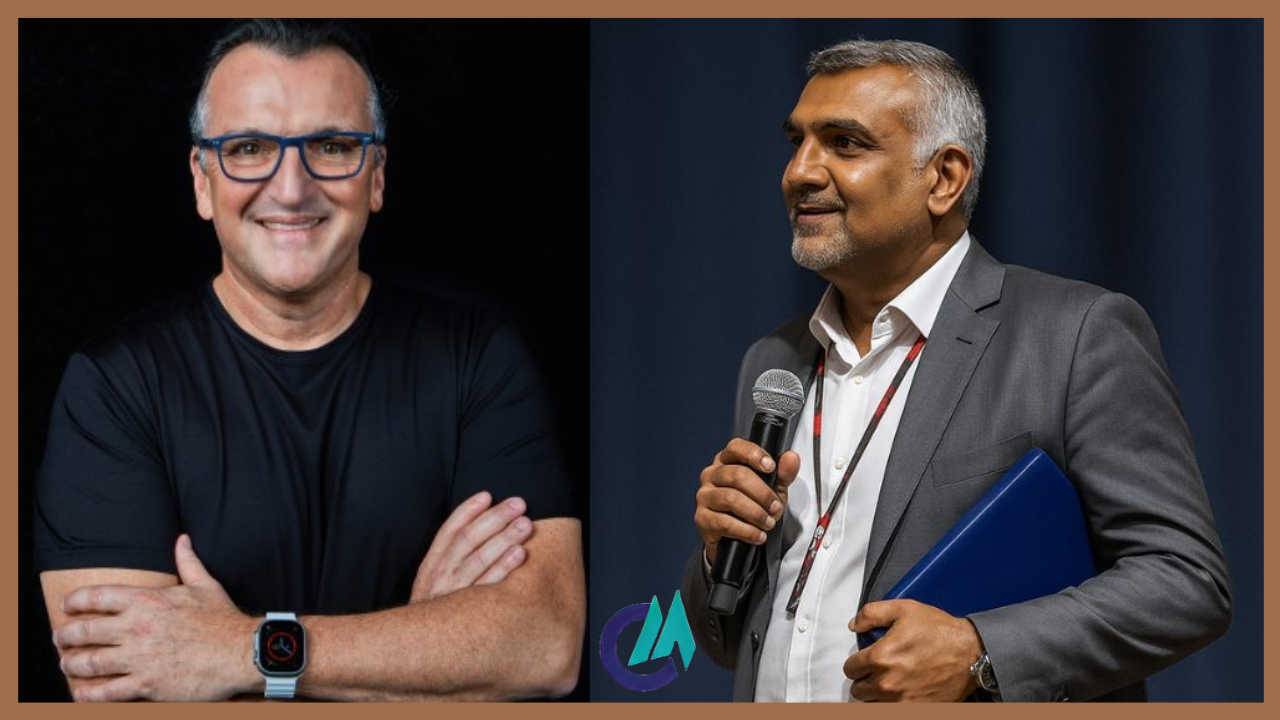
Who Was Pete Samara in Formula 1?
Pete Samara was the kind of person who rarely appeared on camera, yet his work shaped almost every moment viewers saw in a modern Formula 1 broadcast. As the Director of Innovation and Digital Technology, he played a crucial role in how the sport gathered data, produced its global feed, delivered live coverage, and built digital experiences for fans worldwide. People who worked with him often described him as a forward-thinking technologist with a calm, steady approach — someone who championed new ideas while remaining approachable and grounded. When news of his unexpected death surfaced in October 2024, heartfelt tributes quickly spread throughout the F1 paddock and the wider tech community, reflecting the significance of his contributions behind the scenes.
Early Life, Education, and Technical Foundations
Public details about Pete Samara’s personal life remain scarce, but his academic and professional path is easier to trace. He studied Electrical and Electronics Engineering at the University of East London, earning a technical foundation that equipped him with strong problem-solving skills and a deep understanding of complex systems. That mix of engineering expertise and genuine curiosity about emerging technology eventually became central to his role in Formula 1, where fast, reliable data, communication systems, and precision timing are as essential as the machinery on the track. Colleagues often recalled that he wasn’t just an expert in his field — he had a remarkable ability to see how technical decisions fit into a broader vision for teams, broadcasters, and fans worldwide.
Pete Samara F1 Career: From R&D to Digital Leadership
Pete Samara’s career in Formula 1 spanned more than 20 years, during which he became a central figure in the sport’s technological evolution. He joined F1 around 2010 as an R&D Group Manager, working on projects to strengthen timing systems, trackside technology, and the infrastructure supporting race broadcasts. As the sport’s needs grew, so did his role. By 2017, he had stepped into the position of Director of Innovation and Digital Technology, overseeing everything from IT operations and electronics to software engineering, research and development, and digital delivery. In simple terms, he was responsible for the systems that carried live video, audio, and data from the track to millions of fans worldwide.
Formula 1 now operates one of the largest and most sophisticated remote broadcast systems in global sport. At the Media and Technology Centre in Biggin Hill, hundreds of specialists manage everything from the world feed and on-board cameras to graphics and team communications. Pete Samara was at the center of this vast operation, guiding it with a focus on both reliability and innovation. Under his leadership, the system not only met the demands of a worldwide audience but also continued to evolve and improve with each passing season.
Transforming the Digital Experience for F1 Fans
When people describe “modern F1,” they often focus on tighter competition, new venues, or the sport’s growing global footprint. Yet another major shift unfolded quietly in the background — F1’s digital transformation, much of which took shape under Pete Samara’s guidance. During his tenure, the sport invested significant effort in improving its official website and app, giving fans tools such as live timing, real-time driver tracking, on-board camera access, and detailed analytics. A decade earlier, this level of digital depth didn’t exist, and his leadership was a key part of making it possible.
One of the most notable achievements linked to Pete Samara’s leadership was the development and growth of F1’s direct-to-consumer streaming platform. This service enabled fans worldwide to watch every session live, switch between multiple onboard cameras, and track race strategy through rich data overlays. The goal wasn’t simply to move the broadcast online — it was to create a viewing experience that fans could shape to their own interests. That emphasis on immersion and flexibility mirrors how colleagues remember Samara: as someone who believed technology should pull fans closer to the heart of the sport, not get in the way of it.
Innovation, Partnerships, and Data-Driven Thinking
Beyond the fan-focused platforms, Pete Samara also played a significant role in pushing Formula 1 toward more sophisticated analytics and cloud-based technology. He helped build partnerships with leading tech companies to manage the enormous flow of live data generated during each race and to develop tools that could turn that information into meaningful insights. Thanks to this work, everything from predictive race graphics to detailed analysis of tire wear, pace, and strategy became more accurate and accessible, benefiting both teams and fans.
He was also instrumental in reshaping how Formula 1 handles remote production and its overall technical infrastructure. Instead of transporting an entire broadcast compound to every race, F1 transitioned to a hybrid setup that keeps a major central operation at Biggin Hill while sending a minor team to each circuit. This change eased the logistical demands of the sport, established more consistent production standards, and enabled a larger group of engineers and specialists to work together from a single location, connected to the track via high-speed links throughout the season.
What Happened to Pete Samara?
In October 2024, just days before the United States Grand Prix at the Circuit of the Americas, the Formula 1 community was stunned by the news that Pete Samara had passed away unexpectedly at the age of 52. Reports noted that he died on 19 October in Austin, Texas, only a short time before the race weekend began. For colleagues, partners, and fans who had long associated him with the sport’s modern digital evolution, the announcement was deeply felt and came as a profound and heartbreaking surprise.
During the United States Grand Prix weekend, the impact of Pete Samara’s passing was evident throughout the paddock and the broadcast. Presenters and production teams wore black armbands as a sign of respect, and the coverage included heartfelt tributes that reflected on his contributions and influence. Organizations he had worked closely with—especially those involved in STEM education and youth engineering programs—also shared messages honoring his support, noting his commitment to opening doors for young talent and making the sport’s technology more approachable for future generations.
How Did Pete Samara Die? What Is Known About the Cause of Death
Because so many people look up phrases like “how did Pete Samara die,” “Pete Samara’s cause of death,” and “Pete Samara’s heart attack,” it becomes essential to distinguish confirmed information from speculation. Early reports made it clear that he passed away unexpectedly at the age of 52, but they also emphasized that no official cause of death had been shared with the public. In other words, while curiosity spread quickly, the factual record at the time offered only limited details.
In the months after his passing, several smaller blogs and opinion sites began circulating the idea that Pete Samara might have suffered a heart attack. However, these mentions were typically based on speculation or repeated from unverified sources rather than supported by any formal announcement from his family, Formula 1, or medical officials. Some writers even acknowledged that the “heart attack” explanation seemed to spread mainly through search trends and online conversations, highlighting that it remained a rumor rather than a confirmed fact.
Given the information available to the public, the most honest and responsible conclusion is that Pete Samara passed away suddenly on 19 October 2024, and no official cause of death has been released. Stating that he died from a heart attack would be speculative, as reliable sources have not confirmed that detail. What exists instead is widespread curiosity and discussion, while the officially verified facts remain limited.
Legacy: How Pete Samara Changed Formula 1
Even without a complete picture of his personal life, there is no doubt that Pete Samara profoundly shaped the way Formula 1 operates and how millions of people follow the sport today. Under his guidance, F1’s digital platforms grew from simple timing tools into detailed, data-rich experiences. The growth of the sport’s streaming service, the introduction of real-time telemetry for fans, and the steady improvement in broadcast quality all reflect his technical leadership and long-term vision.
Those who worked alongside Pete Samara often spoke about more than just his technical expertise. They remembered his kindness, his willingness to help others, and the genuine enthusiasm he brought to engineering and the future of the sport. For many young engineers and students participating in STEM programs linked to Formula 1, he became a clear example of how a passion for technology could lead to meaningful influence in a global sport — all without ever sitting behind the wheel of a race car.
His influence is visible every race weekend, when fans around the world open an app to check sector times, choose an onboard camera, or stream a Grand Prix from their phones or televisions. The technology behind those features didn’t appear overnight — it evolved through years of experimentation, investment, and leadership from people like Pete Samara, who firmly believed that innovation should go hand in hand with accessibility.
Remembering Pete Samara
When people search for “Pete Samara biography” or “what happened to Pete Samara,” they are usually trying to piece together both the facts of his life and the meaning behind his work. The key details are now well established: he was an engineer trained in electrical and electronic systems; he dedicated more than two decades to Formula 1; he steadily rose to oversee the sport’s innovation and digital technology; and he passed away unexpectedly in October 2024 while in Austin for the race weekend.
The deeper meaning of Pete Samara‘s story lies in how people speak about him. Those inside the sport say he helped redefine Formula 1’s digital identity, while industry partners remember a collaborator who combined genuine enthusiasm with technical expertise. Educational programs highlight his strong support for young engineers and his encouragement of new talent. In that way, his legacy is not centered on the unanswered details of his passing but on the countless ways his work still shapes the sport. Every time the lights go out at the start of a Grand Prix, millions of fans watch and interact through systems he helped bring to life.
Read More: Maths Emporium Guide 2025: Edexcel Login, Pearson Access, Twitter Updates & Virginia Tech Resources.
