


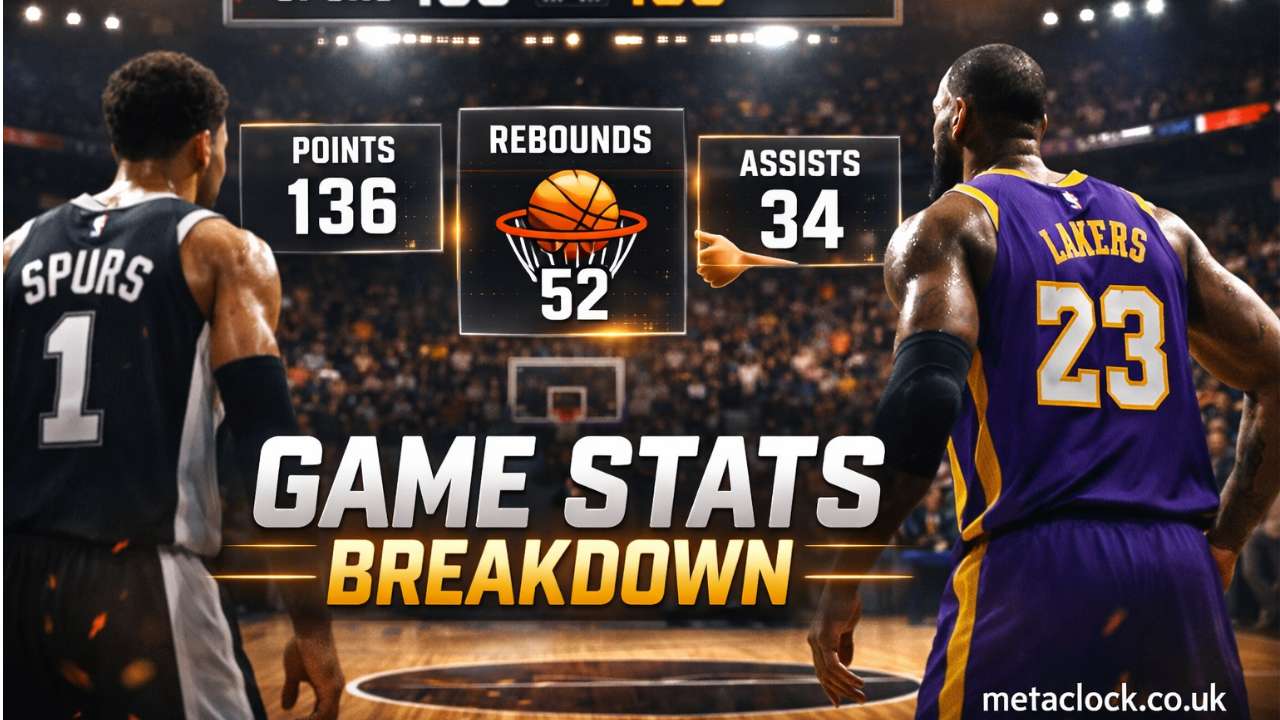
Few NBA matchups capture attention quite like the recent clash between the San Antonio Spurs and Los Angeles Lakers. From tip-off to the final buzzer, the game offered a masterful demonstration of preparation, execution, and standout individual performances. Every statistic told a story: scoring efficiency, rebounding battles, and defensive discipline all highlighted the sharp contrast between the two teams. For anyone watching—or diving into the numbers—this game provided a vivid snapshot of how teamwork, strategy, and key player contributions can shape the outcome. In the following analysis, we examine the Spurs and Lakers’ performances, exploring the statistics that defined this memorable contest.
Match Overview and Final Score Context
The final score made the story clear from the start: San Antonio was in control. They set the tempo early, never giving the Lakers a chance to mount a sustained comeback. Quarter after quarter, the Spurs scored with consistency, steadily building a lead that kept the pressure on Los Angeles. The Lakers had brief bursts of resistance, but each was met with quick, precise responses—smart passes, well-timed shots, and flawless execution on offense. The scoreboard didn’t just reflect shooting accuracy; it told the tale of a team disciplined in transition, patient with shot selection, and ready to seize every opportunity. By the final whistle, the margin of victory perfectly captured the Spurs’ dominance throughout the game.
Team Performance Summary
When you look at the team stats from the Spurs‑Lakers matchup, San Antonio clearly held the upper hand in key areas. Their ball movement stood out, with many more assists than the Lakers, reflecting an offense built on teamwork and shared opportunities rather than isolation plays. Rebounding was another area in which the Spurs asserted control, securing more rebounds and reducing their opponents’ second-chance points. They also protected the ball more effectively, limiting turnovers while forcing Los Angeles into hurried decisions. Together, these numbers set the stage for standout individual performances and showed just how well-rounded San Antonio’s game plan was.
San Antonio Spurs Player Stats Breakdown
San Antonio’s individual performances were a standout aspect of the game. Their leading scorer put on a remarkable display, leading the scoring while dominating the boards, demonstrating a mix of efficiency, confidence, and versatility, finishing in the paint, hitting mid-range jumpers, and shooting from beyond the arc. But it wasn’t just one player carrying the team—San Antonio’s bench stepped up in a big way, with several players hitting double digits and injecting energy on both offense and defense. The guards’ crisp passing kept the team’s rhythm smooth and the floor well spaced, while role players chipped in with timely rebounds and key stops. The result was a balanced, cohesive effort that made it clear this win was built by the whole roster, not a single standout.
Los Angeles Lakers Player Stats Breakdown
From the Lakers’ side, the stats from this Spurs matchup painted a picture of inconsistency on offense. A few players put up decent point totals, but no one was able to seize control and carry the team. There were glimpses of strong playmaking and scoring in the paint, yet turnovers or defensive breakdowns often disrupted those moments. While the Lakers’ rebounding was solid, it couldn’t match the Spurs’ physical dominance on the boards. Their assists showed some ball movement, but it wasn’t consistent enough to break down a disciplined, well-organized defense. Overall, the numbers reflected effort and competitiveness, but also underscored the lack of sustained momentum throughout the game.
Head‑to‑Head Player Comparisons
Examining the key players from both teams provides a clearer picture of how the game unfolded. San Antonio’s top scorer clearly outshone the Lakers’ leading contributors, creating a scoring gap the opposition struggled to close. The Lakers relied on several players contributing smaller numbers, whereas the Spurs had a defined offensive leader supported by efficient scoring from their secondary players. On the playmaking side, San Antonio’s guards delivered more assists while keeping turnovers low, showing sharper decision-making under pressure. Rebounding also leaned in the Spurs’ favor, particularly during pivotal stretches where grabbing possession translated directly into points and momentum.
Key Game Highlights from Statistics
Several key statistical moments shaped the flow of the game. San Antonio came out firing in the first quarter, putting up a high score that immediately put the Lakers on the back foot. The Spurs kept their shooting sharp throughout, especially during stretches when Los Angeles tried to chip away at the lead. Lakers turnovers often led to quick points for San Antonio, steadily widening the gap. The Spurs’ bench also made a notable impact, maintaining consistent scoring even when starters rested. Taken together, these numbers make it clear why the game slipped away from the Lakers and stayed firmly under San Antonio’s control.
Final Statistical Takeaways
The san antonio spurs vs lakers match player stats tell the story of the game in clear detail. San Antonio combined standout individual performances with smooth team chemistry and precise execution, turning in a win that felt decisive from start to finish. The Lakers, on the other hand, showed grit and flashes of promise, but their numbers revealed areas that need work—consistency, ball control, and rebounding all stood out as points for improvement. More than just a final score, the san antonio spurs vs lakers match player stats provide deeper insights into team dynamics, performance trends, and what fans can expect from both squads moving forward.
Read More: LaJoya McCoy: A Story of Leadership, Purpose, and Lasting Impact.
